Showing posts with label tort. Show all posts
Wednesday, May 11, 2016
Thursday, April 21, 2016
Thursday, March 24, 2016
Tuesday, September 8, 2015
Wednesday, May 13, 2015
Monday, August 27, 2012
Peanut Butter Cup Chocolate Cake Cheesecake
Note: Plan ahead, this cake should be made over the course of 2-3 days. Please read this recipe in its entirety before making. I have included lots of helpful notes throughout the text.
Edit: Also, please note that this cheesecake should be stored in the freezer and is easier to cut when still partially frozen.
Crustless Cheesecake portion:
30 mini peanut butter cups, each one quartered
2 sticks (16 tbsp) softened butter
1 cup granulated sugar
4- 8 oz packages cream cheese, softened
1- 3 oz. package cook and serve vanilla pudding
4 eggs
2 tsp baking powder
1 tbsp lemon juice
Preheat oven to 325 degrees. Grease two 9" pans with shortening, line the pans with parchment and then grease the parchment. Lightly flour the pans and tap out excess over the sink. Set aside.
Cream butter and sugar in a stand mixer fitted with paddle attachment. Add cream cheese a little at a time until smooth. Scrape bowl down and beat again on medium speed, adding eggs one at a time. Add remaining ingredientsexcept peanut butter cups. Mix again until smooth.
With a rubber spatula, fold in quartered peanut butter cups. Divide batter evenly between pans. You should have 8 cups of batter, so 4 cups in each pan. Smooth batter with offset spatula (Fig.1) and bake for 55 minutes to 1 hour. Cheesecake will puff up during baking, then deflate when taken out.
Do not turn out cheesecakes when they are finished baking. Put them directly in the freezer, and leave until frozen solid.
Turn out frozen cheesecake layers and peel parchment from the bottoms. Line the pan they were in with enough parchment or wax paper to hang over the sides of the pan (Fig. 3). Place the cheesecakes back in the pans. This makes removal FAR more easy after caramel layer has been added. Place cheesecakes back into the freezer while you make the caramel layer.
Caramel for cake layers:
2-14 oz cans of sweetened condensed milk
10 tbsp. butter
80 caramels
Scant cup of salted peanut halves
Important note: This recipe is made in two batches, so all of the ingredients are divided.
In a large microwaveable bowl, place 1- 14 oz. can sweetened condensed milk, 5 tbsp. butter, and 40 caramels. Heat at 1 minute intervals until smooth. My household microwave at full power took about 4 minutes.
Pour caramel evenly over frozen layers of cheesecakes. Be careful to not let much of the caramel drip over the sides. Sprinkle each layer with 3-4 tbsp. of salted peanut halves. Return cheesecake layers to freezer.
Chocolate cake portion:
1 3/4 cup all purpose flour
2 cups sugar
3/4 cups cocoa powder, unsweetened
2 tsp. baking powder
1 tsp salt
1 cup buttermilk
1/2 cup canola oil (or other vegetable oil)
2 eggs
1 tsp. vanilla extract
1 cup of coffee - must be hot!
Grease 2- 9" pans with shortening and line with parchment. Grease parchment and lightly flour pan, tapping out excess. Preheat oven to 350 degrees.
Sift all the dry ingredients into the bowl of a stand mixer fitted with paddle attachment. In a 4 cup glass measure, mix all the wet ingredients except hot coffee!
Turn mixer on low speed and gradually add wet ingredients to dry. Stop and scrape down the bowl, making sure to scrape the bottom where dregs tend to gather. Return mixer to low speed and beat in hot coffee. Mixture will be very thin.
Divide batter evenly between the two pans, and bake for 35-40 minutes (check at 35). Cake is ready when toothpick tester comes out clean. Cool slightly in pans. Run knife around the edge of cakes and turn them out. Let them rest on a cooling rack.
When cool, level cakes with a serrated knife or cake leveler. Line cake pans with parchment or wax paper, enough to hang over the edges (just like previously with the cheesecake layers). Return cake layers to parchment lined pans.
Make 2nd batch of caramel as directed for the cheesecake layer. Pour caramel evenly over both chocolate cake layers (Fig. 4), sprinkle with 3-4 tbsp. salted peanut halves. Place caramel covered cakes in freezer until caramel has hardened a bit (about 15 minutes).
Remove all cake layers from freezer. Remove all cake layers from pans using the parchment overhang to pull them out. Stack layers beginning with 1 layer of chocolate cake as the bottom, then cheesecake layer, then chocolate layer, and last cheesecake layer will be on top (Fig.5). Wrap layers in plastic wrap and freeze overnight. You'll frost your cake the next day.
Chocolate ganache frosting:
13 oz. or 1 2/3 cup semisweet chocolate chips
1 1/2 cups heavy cream
1/2 tbsp. corn syrup
Note: Remove cheesecake layers from freezer and unwrap. Choose your serving plate and line it with wax paper strips. Place cake over strips. Now you're ready to frost.
Put chocolate chips in a medium bowl or 4 cup measure. Heat cream in a saucepan over medium high heat until very hot but not boiling. Pour hot cream over chips and stir until smooth. Remove 2/3 cup chocolate mixture and pour into a small bowl. Add 1/2 tbsp. corn syrup and stir. When combined, immediately pour over top of cake (Fig. 6), creating a shiny dark topping and taking care that most remains on top of the cake and doesn't spill down the edges (Fig.7). Return cake, uncovered this time, to freezer.
Fit stand mixer with whisk attachment. Pour remaining chocolate ganache into the stand mixer bowl and whip on the highest speed for 5-10 minutes (I set my timer for 7 minutes) until icing is light and fluffy. Icing is ready when it is thick and can be pulled into a stiff peak (Fig. 8).
Remove cake layers from freezer and frost sides with chocolate ganache using an offset spatula. The whipped frosting should grab on to the frozen cakes well. Use all the ganache frosting, evening the cake's surface as you work.
Chocolate curls:
1 1/2 cups chocolate chips -semisweet
Equipment:
11x14 cookie sheet
Small brownie spatula with a sharp edge - like this one
Melt chocolate chips at 30 second intervals in the microwave; stir until smooth. Pour onto cookie sheet and spread evenly with an offset spatula. Place in refrigerator for 5-7 minutes, or until the chocolate is firm and has a matte appearance.
Remove from refrigerator and let stand for a few minutes (3-5ish) at room temperature. With a small, sharp spatula, begin scraping chocolate at one edge in a thin strip. If chocolate breaks into pieces it is too cold, so allow it to stand a few minutes more at room temp. Chocolate should curl easily as you run your spatula under the chocolate and down the length of the cookie sheet. Place curls in a small bowl and store in refrigerator until ready for use.
To garnish cake with chocolate curls, let cake stand at room temperature for a few minutes, then remove curls from refrigerator and gently press into the sides of the cake.
Peanut Butter Frosting and Garnish:
2/3 cup creamy peanut butter
8 tbsp butter, softened
1 cup confectioners' sugar
9 mini peanut butter cups
Cream peanut butter and butter together in stand mixer with whisk attachment. Gradually add powdered sugar. Whip on high speed until light and fluffy.
Transfer icing to a piping bag fitted with a large french piping tip. Pipe 8 large swirls around the top edge of cake, and pipe one swirl in the middle. Garnish each swirl with a peanut butter cup.
Notes:
This cake should be sliced and served cold, not frozen. ***Edit: I'm being told from some of you that it is easier to slice partially frozen. Store in freezer.
Using the exact same pans for both cheesecakes and chocolate cakes will keep you from having to trim the edges when stacking all layers together. (I had to trim the cheesecake edges a little, see Fig.7)
The caramel is very gooey and when cold can be a little resistant to slicing. Run a knife under hot water and dry it off, then cut the cake with the warm knife for a nice even slice.
Labels:
tort
Seven Sins Chocolate Cake
Tip: Instead of picking up a torted cake piece with your hands, slide it onto a large plate. This will keep the cake from breaking into pieces and makes it easy to slide the piece back onto the filled cake.
1 oz. fine quality unsweetened baker's chocolate, chopped evenly
3/4 cup plus 1 1/2 tbsp. unsweetened cocoa powder
1 cup hot coffee (can use hot water or decaf coffee if caffeine sensitive)
2 eggs
2 egg yolks
1/4 cup sour cream
1 tbsp vanilla bean paste or vanilla extract
2 1/4 cups all purpose flour
1 1/2 cups light brown sugar, tightly packed
1 tsp baking soda
1/2 tsp salt
16 tbsp (2 US sticks) unsalted butter, softened
Preheat oven to 350 degrees. Grease two 9-inch cake pans with vegetable shortening and line with a circle of parchment paper. Grease paper and flour; tap out excess and set pan aside.
In a medium bowl, whisk the chocolate, cocoa and hot coffee (or water) until smooth. Set aside.
In another bowl, whisk the eggs, yolks, sour cream, half the chocolate mixture and vanilla until just combined.
In the bowl of a stand mixer fitted with the paddle attachment, mix the flour, brown sugar, baking soda and salt on low for 30 seconds. Add the softened butter and the remaining chocolate mixture. Mix on low speed until the dry ingredients are moistened. Raise the speed to medium and beat for 30 seconds. Scrape down the sides of the bowl.
With the mixer off between additions, add the egg mixture in two parts, starting on medium-low speed and gradually increasing to medium. Beat on medium speed for 45 seconds after each addition to incorporate the ingredients and strengthen the structure. The batter will be fluffy. Scrape down the sides of the bowl. Using a silicone spatula, scrape the batter into the prepared pans and smooth the surface evenly with a small offset spatula.
Bake for 30-40 minutes (check at 30). Cake is does when a toothpick tester comes out clean and the cake springs back when pressed in the middle. Let the baked cakes cool in the pan on a wire rack for 10 minutes, then turn cake out onto a wire rack sprayed with cooking oil. Let cool completely.Trio of pastry creams:
Adapted from the SprinkleBakes book.
Tip: Be sure to temper eggs carefully! If you goof a little and pastry cream turns out lumpy, pass it through a fine sieve before refrigerating.
2.5 oz. dark chocolate
2.5 oz. white chocolate
2.5 oz. milk chocolate
¼ cup cornstarch
2 cups evaporated milk
2 eggs
4 egg yolks
¾ cup granulated sugar
3 tablespoons unsalted butter
2 tbsp. whiskey
3 tbsp. dulce de leche (find this canned in the ethnic food aisle)
1-2 tsp. espresso powder (to taste)
Have ready three small bowls (2 cup size), wiped spotless of any moisture. Chop the chocolate evenly and place each type of chocolate in a separate bowl. Set aside.
In a small bowl, dissolve the cornstarch in 1/2 cup of the milk. Beat the whole eggs, then the yolks, one at a time, into the cornstarch mixture.
In a saucepan, combine the remaining milk and the sugar; bring to a boil, whisking constantly.
While whisking the egg mixture, slowly pour 1/3 of the boiling milk into it, to temper the eggs.
Return the remaining milk in the saucepan to medium-low heat.
Pour the hot egg mixture into the saucepan in a thin stream, whisking, so as to not scramble the eggs.
Whisk constantly until the mixture thickens and begins to boil. Remove from the heat and pour the hot pastry cream over the chopped chocolate, dividing evenly between the three bowls. Let stand for 2 minutes, and then stir each bowl until mixture is well incorporated. Mix 1 tbsp. butter in each of the bowls. When butter has melted and is thoroughly combined, fold in 2 tbsp. whisky into the dark chocolate pastry cream; 3 tbsp. dulce de leche into the white chocolate pastry cream; 1-2 tsp. espresso powder into the milk chocolate pastry cream.
Press a sheet of plastic wrap directly on the surfaces of each type of pastry cream so they do not form a skin. Cool to room temperature.
Refrigerate until ready to use.Milk chocolate marshmallow frosting:
12 tbsp (1 1/2 US sticks) unsalted butter, softened
2 2/3 cups powdered sugar
6 oz. milk chocolate melted and slightly cooled
7 oz. marshmallow cream
With a hand mixer or standing mixer fitted with the whip attachment, beat butter for 3 minutes until fluffy. Add powdered sugar and mix on low until incorporated. Add melted chocolate and beat until fluffy. Add marshmallow cream and beat until frosting has lightened in color and all ingredients are well combined.
Scrape down bowl and mix again. Transfer 3/4 cup to a piping bag or zip-top bag with the corner snipped for later use. Fill and frost the cakes:
Cut each cake in half horizontally (this is called "torting"); pipe a line of frosting around the edge of the first cake piece. This makes a reservoir in which to hold the pastry cream (this is extra insurance, sometimes pastry cream is lax if not well refrigerated). Spread the pastry cream inside the icing ring and top with another cake piece. Pipe an icing line as before and fill white chocolate dulce de leche cream; repeat with the next cake piece and milk chocolate mocha cream. Top with the final cake layer and frost the entire cake. You may choose to crumb coat the cake and refrigerate, then do a final smooth coat of icing (recommended).
1 oz. fine quality unsweetened baker's chocolate, chopped evenly
3/4 cup plus 1 1/2 tbsp. unsweetened cocoa powder
1 cup hot coffee (can use hot water or decaf coffee if caffeine sensitive)
2 eggs
2 egg yolks
1/4 cup sour cream
1 tbsp vanilla bean paste or vanilla extract
2 1/4 cups all purpose flour
1 1/2 cups light brown sugar, tightly packed
1 tsp baking soda
1/2 tsp salt
16 tbsp (2 US sticks) unsalted butter, softened
Preheat oven to 350 degrees. Grease two 9-inch cake pans with vegetable shortening and line with a circle of parchment paper. Grease paper and flour; tap out excess and set pan aside.
In a medium bowl, whisk the chocolate, cocoa and hot coffee (or water) until smooth. Set aside.
In another bowl, whisk the eggs, yolks, sour cream, half the chocolate mixture and vanilla until just combined.
In the bowl of a stand mixer fitted with the paddle attachment, mix the flour, brown sugar, baking soda and salt on low for 30 seconds. Add the softened butter and the remaining chocolate mixture. Mix on low speed until the dry ingredients are moistened. Raise the speed to medium and beat for 30 seconds. Scrape down the sides of the bowl.
With the mixer off between additions, add the egg mixture in two parts, starting on medium-low speed and gradually increasing to medium. Beat on medium speed for 45 seconds after each addition to incorporate the ingredients and strengthen the structure. The batter will be fluffy. Scrape down the sides of the bowl. Using a silicone spatula, scrape the batter into the prepared pans and smooth the surface evenly with a small offset spatula.
Bake for 30-40 minutes (check at 30). Cake is does when a toothpick tester comes out clean and the cake springs back when pressed in the middle. Let the baked cakes cool in the pan on a wire rack for 10 minutes, then turn cake out onto a wire rack sprayed with cooking oil. Let cool completely.Trio of pastry creams:
Adapted from the SprinkleBakes book.
Tip: Be sure to temper eggs carefully! If you goof a little and pastry cream turns out lumpy, pass it through a fine sieve before refrigerating.
2.5 oz. dark chocolate
2.5 oz. white chocolate
2.5 oz. milk chocolate
¼ cup cornstarch
2 cups evaporated milk
2 eggs
4 egg yolks
¾ cup granulated sugar
3 tablespoons unsalted butter
2 tbsp. whiskey
3 tbsp. dulce de leche (find this canned in the ethnic food aisle)
1-2 tsp. espresso powder (to taste)
Have ready three small bowls (2 cup size), wiped spotless of any moisture. Chop the chocolate evenly and place each type of chocolate in a separate bowl. Set aside.
In a small bowl, dissolve the cornstarch in 1/2 cup of the milk. Beat the whole eggs, then the yolks, one at a time, into the cornstarch mixture.
In a saucepan, combine the remaining milk and the sugar; bring to a boil, whisking constantly.
While whisking the egg mixture, slowly pour 1/3 of the boiling milk into it, to temper the eggs.
Return the remaining milk in the saucepan to medium-low heat.
Pour the hot egg mixture into the saucepan in a thin stream, whisking, so as to not scramble the eggs.
Whisk constantly until the mixture thickens and begins to boil. Remove from the heat and pour the hot pastry cream over the chopped chocolate, dividing evenly between the three bowls. Let stand for 2 minutes, and then stir each bowl until mixture is well incorporated. Mix 1 tbsp. butter in each of the bowls. When butter has melted and is thoroughly combined, fold in 2 tbsp. whisky into the dark chocolate pastry cream; 3 tbsp. dulce de leche into the white chocolate pastry cream; 1-2 tsp. espresso powder into the milk chocolate pastry cream.
Press a sheet of plastic wrap directly on the surfaces of each type of pastry cream so they do not form a skin. Cool to room temperature.
Refrigerate until ready to use.Milk chocolate marshmallow frosting:
12 tbsp (1 1/2 US sticks) unsalted butter, softened
2 2/3 cups powdered sugar
6 oz. milk chocolate melted and slightly cooled
7 oz. marshmallow cream
With a hand mixer or standing mixer fitted with the whip attachment, beat butter for 3 minutes until fluffy. Add powdered sugar and mix on low until incorporated. Add melted chocolate and beat until fluffy. Add marshmallow cream and beat until frosting has lightened in color and all ingredients are well combined.
Scrape down bowl and mix again. Transfer 3/4 cup to a piping bag or zip-top bag with the corner snipped for later use. Fill and frost the cakes:
Cut each cake in half horizontally (this is called "torting"); pipe a line of frosting around the edge of the first cake piece. This makes a reservoir in which to hold the pastry cream (this is extra insurance, sometimes pastry cream is lax if not well refrigerated). Spread the pastry cream inside the icing ring and top with another cake piece. Pipe an icing line as before and fill white chocolate dulce de leche cream; repeat with the next cake piece and milk chocolate mocha cream. Top with the final cake layer and frost the entire cake. You may choose to crumb coat the cake and refrigerate, then do a final smooth coat of icing (recommended).
Labels:
tort
Peanut Butter Cup Brownie Cake
Brownie layers:
1 1/2 cups butter
6 ounces unsweetened baker’s chocolate, chopped
3 cups granulated sugar
5 large eggs
1 1/2 teaspoons vanilla extract
1 1/2 cups all-purpose flour
3/4 teaspoon salt
1/2 tsp. baking soda
In a medium saucepan over medium-low heat, melt butter and chocolate; stir until smooth. Transfer to a large bowl and whisk in sugar. Add eggs, one at a time, whisking well after each addition. Whisk in vanilla, flour, salt and baking soda.
Pour into three greased and floured 9-inch round baking pans. Bake at 350° for 23-25 minutes. Cool for 10 minutes; remove from pan to a wire rack to cool completely. Wrap in plastic wrap or store in air-tight containers until needed.
Peanut butter layers:
6 cups powdered sugar
2 cups creamy peanut butter
1/2 cup butter, melted
1/4 cup (maybe more) heavy cream
Mix together the powdered sugar, peanut butter and melted butter in a standing mixer fitted with the paddle attachment. Mixture will be crumbly. Add cream 1 tablespoon at a time until the mixture becomes a consistent workable dough. It should not be crumbly or stick to your fingers. The mixture should hold together easily when a small amount is squeezed tight in the palm of your hand.
Divide the dough into two even portions. Spray one (or two if you have them) 9-inch spring-form pans with cooking spray or line two 9-inch pans with parchment rounds. Press peanut butter dough into the bottom of the pans evenly, forming the peanut butter layers. Turn the layers out onto two cookie sheets and place in freezer until frozen solid.
Chocolate frosting:
1 1/2 cups butter, softened
1 1/4 cups powdered sugar
1/2 cup unsweetened cocoa powder
2 tsp. vanilla extract
1 tsp. espresso powder
Beat softened butter and powdered sugar together in the bowl of a standing mixer fitted with the whisk attachment. Scrape down the sides of the bowl and beat again until creamy. Add cocoa powder and vanilla extract; beat well. Add espresso powder and beat for 1-2 minutes longer until thoroughly incorporated.
(Note: I use King Arthur espresso powder, but you could substitute finely ground instant coffee)
Assembly:
8 peanut butter cups, each cut in half
3 tsp. chocolate shavings
Pearlized gold crystal sugar *optional
Remove peanut butter layers from the freezer. Thinly frost a brownie layer and top with a peanut butter layer; frost peanut butter layer and top with a brownie layer. Repeat steps until all layers are frosted and stacked. Thinly frost the entire cake. Pipe 11 frosting rosettes around the top edge of the cake with a large French piping tip; pipe one rosette in the middle of the cake. Top each rosette on the outer edge of the cake with a peanut butter cup half. Place four peanut butter cup halves, fanned, on the middle rosette. Sprinkle top of cake with chocolate shavings.
If using the gold sugar, place the cake (on the cake stand or serving platter) in a clean kitchen sink and toss sprinkles onto the sides of the cake. Sprinkle a little on top of the cake, too. Keep cake covered tightly in plastic wrap to prevent loss of moisture.
1 1/2 cups butter
6 ounces unsweetened baker’s chocolate, chopped
3 cups granulated sugar
5 large eggs
1 1/2 teaspoons vanilla extract
1 1/2 cups all-purpose flour
3/4 teaspoon salt
1/2 tsp. baking soda
In a medium saucepan over medium-low heat, melt butter and chocolate; stir until smooth. Transfer to a large bowl and whisk in sugar. Add eggs, one at a time, whisking well after each addition. Whisk in vanilla, flour, salt and baking soda.
Pour into three greased and floured 9-inch round baking pans. Bake at 350° for 23-25 minutes. Cool for 10 minutes; remove from pan to a wire rack to cool completely. Wrap in plastic wrap or store in air-tight containers until needed.
Peanut butter layers:
6 cups powdered sugar
2 cups creamy peanut butter
1/2 cup butter, melted
1/4 cup (maybe more) heavy cream
Mix together the powdered sugar, peanut butter and melted butter in a standing mixer fitted with the paddle attachment. Mixture will be crumbly. Add cream 1 tablespoon at a time until the mixture becomes a consistent workable dough. It should not be crumbly or stick to your fingers. The mixture should hold together easily when a small amount is squeezed tight in the palm of your hand.
Divide the dough into two even portions. Spray one (or two if you have them) 9-inch spring-form pans with cooking spray or line two 9-inch pans with parchment rounds. Press peanut butter dough into the bottom of the pans evenly, forming the peanut butter layers. Turn the layers out onto two cookie sheets and place in freezer until frozen solid.
Chocolate frosting:
1 1/2 cups butter, softened
1 1/4 cups powdered sugar
1/2 cup unsweetened cocoa powder
2 tsp. vanilla extract
1 tsp. espresso powder
Beat softened butter and powdered sugar together in the bowl of a standing mixer fitted with the whisk attachment. Scrape down the sides of the bowl and beat again until creamy. Add cocoa powder and vanilla extract; beat well. Add espresso powder and beat for 1-2 minutes longer until thoroughly incorporated.
(Note: I use King Arthur espresso powder, but you could substitute finely ground instant coffee)
Assembly:
8 peanut butter cups, each cut in half
3 tsp. chocolate shavings
Pearlized gold crystal sugar *optional
Remove peanut butter layers from the freezer. Thinly frost a brownie layer and top with a peanut butter layer; frost peanut butter layer and top with a brownie layer. Repeat steps until all layers are frosted and stacked. Thinly frost the entire cake. Pipe 11 frosting rosettes around the top edge of the cake with a large French piping tip; pipe one rosette in the middle of the cake. Top each rosette on the outer edge of the cake with a peanut butter cup half. Place four peanut butter cup halves, fanned, on the middle rosette. Sprinkle top of cake with chocolate shavings.
If using the gold sugar, place the cake (on the cake stand or serving platter) in a clean kitchen sink and toss sprinkles onto the sides of the cake. Sprinkle a little on top of the cake, too. Keep cake covered tightly in plastic wrap to prevent loss of moisture.
Labels:
tort
Tuesday, August 21, 2012
dobos torte
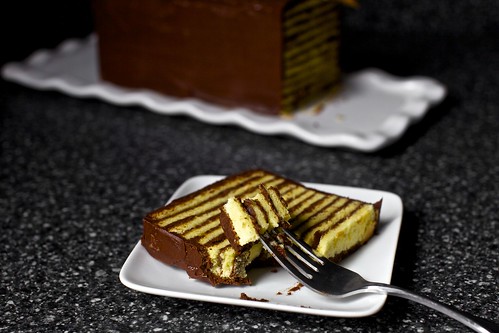
Dobos Torte
Adapted from Maida Heatter’s Great Book of Desserts; caramel layer and a host of tips from Joe Pastry
Time, estimated: I made this cake lazily, with several long interruptions, over a span of 5 hours. With more focus, I believe it can be done in 3 hours. With good planning and the rev of a strong cup of coffee, I suspect it could be pulled off in 2 hours, but hardly think that would be much fun.
Notes: This dobos torte, as far as I’m concerned, is rare among really showy cakes in that it tastes even awesomer than it looks, and that days later, its as good if not better than it was the first day it was made. Personally, I always pause before making sponge cakes, and they can be a little dry and a bit dull. But this one, with an insanely buttery dark chocolate frosting sandwiching it’s pancake-like layers, manages to be neither, and has a softness you wouldn’t expect from something that slices so neatly. In the fridge, that shell-like chocolate exterior locks in the moisture for days.
I detoured from tradition in a few ways. First, I made more layers than the requisite 7. You’re welcome to make your cake layers as thin as you can bake them up, as most pastry chefs enjoy challenging themselves to. You can double or quadruple the cake recipe and make a staggering stack of a cake, too. 35 for a 35th birthday, anyone?
I also made the cake rectangular as this was how I remembered it most fondly, and allowed me to minimize my baking and fussing. Although round cakes are more traditional, I felt extra validated by my choice when I consulted George Lang’s The Cuisine of Hungary and found that he, too, advised a squared-off cake and the least fussy baking approach. If you have an oven that fits a 12×17-inch pan (mine, alas, does not) you can bake this entire cake in 5 minutes, and divide the layer in a 6-high cake.
Here are some shaping/stacking options. For each, you can make additional layers if you feel comfortable baking your cake layers thinner:
A 7-layer 9-inch round cake (the most traditional)
A 14-layer 6-inch round (would serve fewer people but have tall, showy slices)
A 12-layer 4×8-inch cake (my method, baked in 4 quarter-sheet pans, each divided into thirds)
A 6-layer 4×8.5-inch cake (the more traditional rectangle, baked in a single 12×17-inch sheet pan)
Cake layers:
7 large eggs, separated
3 large egg yolks
1 pound (3 1/2 cups or 455 grams) confectioners’ sugar, plus extra for dusting racks
3/4 cup (94 grams or 3 1/3 ounces) all-purpose flour
1 tablespoon lemon juice
1/8 teaspoon table salt
Frosting and filling:
1/2 pound (8 ounces or 227 grams) semi- or bittersweet chocolate, coarsely chopped
1/2 pound (2 sticks or 226 grams) unsalted butter, cut into chunks
1 teaspoon vanilla extract
3 large egg yolks
2 tablespoons confectioners’ sugar
Caramel layer (optional)
1/2 cup granulated sugar
1 tablespoon water
Handful of toasted, peeled hazelnuts
Prepare your cake pans: Choose a cake size and shape option from the Notes, above. Assemble either the cake pans you will need, or sheets of parchment paper if you don’t have all the necessary pans. If using cake pans, line the bottom of each with a sheet of fitted parchment paper, and butter and flour (or use a butter-flour spray) the parchment and sides of the pan. Tap out excess flour, if needed. If using sheets of parchment paper, cut each larger than needed for the cake shape and size. Stencil your cake shape on one side of the sheet, then flip it over and butter and flour the shape area on the reverse side. Again, tap out any excess flour. [Want to make the number 1 for your kid's first birthday? This is how to approach it.]
Make the cake: Preheat oven to 450°F and place a rack in the center of your oven. In the bowl of an electric mixer, beat 10 egg yolks for a few minutes at high speed, until pale and lemon-colored. Reduce speed and gradually add sugar, then increase the speed and beat the yolks and sugar until thick and glossy. Scrape bowl occasionally with rubber spatula. Reduce speed again and gradually add flour; increase speed mix for 5 minutes more, then mix in lemon juice. Scrape bowl again with a rubber spatula. In a separate bowl with cleaned beaters, or by transferring your cake batter to a new bowl and washing it out and drying it with a long sigh, beat the 7 egg whites with a whisk attachment until they hold stiff peaks. Because your yolk mixture is more or less the thickness of spackle at this point, stir a few heaping spoonfuls of the whites into it to loosen the mixture, before folding in the rest of the whites in three additions. When you’re done, your batter will have transformed from a dry paste to a spreadable, foamy batter.
Bake your cake layers: Spread your batter in prepared pans or within their stenciled shapes on parchment paper; try to push the batter rather than pull it with an offset spatula, it will help keep the parchment from rolling up. Don’t worry if they spread past the shape outline on parchment; you will trim them later. If you have a digital scale and want to be super-fussy about making sure the layers are even, weighing the batter and dividing it out accordingly will do the trick. [I can make it even easier; the net weight of my batter was 985 grams.] If not and you’re aiming for a traditional 7-layer 9-inch round cake, spread batter to about 1/4-inch thickness in each circle. Spread the batter evenly to the edges with an offset spatula; be careful not to leave any holes. If you’re using parchment shapes, slide cookie sheets under them before baking.
Bake each layer for 5 minutes, or until golden with some dark brown spots. Thicker layers may take up to 2 additional minutes. When layer is baked, remove it from the oven and flip it out onto a cooling rack that has been dusted with a small amount of confectioners’ sugar. Carefully, gently remove parchment paper then flip cake back onto another lightly dusted cooling rack to finish cooling. It’s best to cool the layers right side up; the tops are the stickiest part.
Repeat with remaining layers. Dunk your cake batter bowl in water right away; that egg yolk-enriched batter dries quickly and was surprisingly hard to scrub off later! Layers will cool very quickly. Trim edges of cake, if needed, to make even shapes or divide larger rectangular pans accordingly.
Make the filling and frosting: Melt chocolate until smooth. Set aside to cool to room temperature, but of course not so cool that it hardens again. In the bowl of an electric mixer, beat butter until soft and smooth, scraping frequently. Add vanilla and 3 egg yolks. Add sugar and cooled chocolate, beating until thoroughly mixed and scraping as needed.
Assemble the cake: Place four strips of parchment or waxed paper around the outer edges of your cake plate. Place first cake layer on plate and spread chocolate on top and to edges with an offset spatula. The filling must be spread fairly thinly to have enough for all layers and the outsides of the cake. However, I’d preemptively scaled up the chocolate filling and frosting and had nearly two cups of extra — the levels listed above should be just fine. Repeat with remaining layers (or all layers except one, if you’d like to do a decorative caramel layer), stacking cake as evenly as possible. Once fully stacked and filled, you can trim the edges again so that they’re even.
Spread chocolate on outside of cake in a thin coat, just to cover and adhere the crumbs to the cake. Place cake in fridge for 30 minutes (or freezer for 5 minutes) to set the chocolate. Spread chocolate more thickly and smoothly to make a final exterior coat of frosting. Remove paper strips.
Caramel topping, if using: Lightly grease a sheet of parchment paper. Place last cake layer on this sheet. Lightly oil a large chef’s knife (if cutting layer into 16 traditional wedges) or sharp cookie cutter of your choice and set aside. Combine the sugar and water in a small, heavy saucepan and swirl it until the sugar melts and begins to turn a pale amber color. Quickly and carefully, pour this (you’ll have a bit of extra) over the prepared cake layer and spread it evenly with an offset spatula, right over the outer edges. Using prepared knife or cutter, quickly cut layer as you wish. Leave in place, then cool completely. Once fully cooled, cut edges of shapes again, to ensure that you can remove them cleanly. Arrange caramel pieces or wedges over cake, propping them up decoratively with hazelnuts.
Chill cake until needed.
Do ahead: You can bake the cake layers ahead of time, freezing them between sheets of waxed paper, wrapped tightly in plastic. No need to defrost before assembling. The whole cake has kept for 4 days for us now, and seems like it would safely keep for a week.
Labels:
tort
Tiramisu Cake
Baking: From My Home to Yours by Dorie Greenspan
For the cake layers:
2 cups cake flour
2 teaspoons baking powder
1/8 teaspoon baking soda
1/4 teaspoon salt
1 1/4 sticks (10 tablespoons) unsalted butter, room temperature
1 cup sugar
3 large eggs
1 large egg yolk
1 1/2 teaspoons pure vanilla extract
3/4 cup buttermilk
For the espresso extract:
2 tablespoons instant espresso powder
2 tablespoons boiling water
For the espresso syrup:
1/2 cup water
1/3 cup sugar
1 tablespoon amaretto, Kahlua, or brandy (Deb note: I used brandy)
For the filling and frosting:
1 8-ounce container mascarpone
1/2 cup confectioners’ sugar, sifted
1 1/2 teaspoons pure vanilla extract
1 tablespoon amaretto, Kahlua, or brandy (Deb note: I used brandy)
1 cup cold heavy cream
2 1/2 ounces bittersweet or semisweet chocolate, finely chopped, or about 1/2 cup store-bought mini chocolate chips
Chocolate-covered espresso beans, for decoration (optional)
Cocoa powder, for dusting
Getting ready:
Center a rack in the oven and preheat the oven to 350 degrees F. Butter two 9×2 inch round cake pans, dust the insides with flour, tap out the excess, and line the bottoms of the pans with parchment or wax paper. Put the pans on a baking sheet.
To make the cake:
Sift together the cake flour, baking powder, baking soda, and salt.
Working with a stand mixer, preferably fitted with a paddle attachment, or with a hand mixer in a large bowl, beat the butter on medium speed until soft and creamy. Add the sugar and beat for another 3 minutes. Add the eggs one by one, and then the yolk, beating for 1 minute after each addition. Beat in the vanilla; don’t be concerned if the mixture looks curdled. Reduce the mixer speed to low and add the dry ingredients alternately with the buttermilk, adding the dry ingredients in 3 additions and the milk in 2 (begin and end with the dry ingredients); scrape down the sides of the bowl as needed and mix only until the ingredients disappear into the batter. Divide the batter evenly between the two pans and smooth the tops with a rubber spatula.
Bake for 28 to 30 minutes, rotating the pans at the midway point. When fully baked, the cakes will be golden and springy to the touch and a thin knife inserted into the centers will come out clean. Transfer the cakes to a rack and cool for about 5 minutes, then run a knife around the sides of the cakes, unmold them, and peel off the paper liners. Invert and cool to room temperature right-side up.
To make the extract:
Stir the espresso powder and boiling water together in a small cup until blended. Set aside.
To make the syrup:
Stir the water and sugar together in a small saucepan and bring just to a boil. Pour the syrup into a small heatproof bowl and stir in 1 tablespoon of the espresso extract and the liqueur or brandy; set aside.
To make the filling and frosting:
Put the mascarpone, sugar, vanilla, and liqueur in a large bowl and whisk just until blended and smooth.
Working with the stand mixer with the whisk attachment or with a hand mixer, whip the heavy cream until it holds firm peaks. Switch to a rubber spatula and stir about one quarter of the whipped cream into the mascarpone. Fold in the rest of the whipped cream with a light touch.
To assemble the cake:
If the tops of the cake layers have crowned, use a long serrated knife and a gentle sawing motion to even them. Place one layer right-side up on a cardboard round or a cake plate protected with strips of wax or parchment paper. Using a pastry brush or a small spoon, soak the layer with about one third of the espresso syrup. Smooth some of the mascarpone cream over the layer – user about 1 1/4 cups – and gently press the chopped chocolate into the filling. Put the second cake layer on the counter and soak the top of it with half the remaining espresso syrup, then turn the layer over and position it, soaked side down, over the filling. Soak the top of the cake with the remaining syrup.
For the frosting, whisk 1 to 1 1/2 tablespoons of the remaining espresso extract into the remaining mascarpone filling. Taste the frosting as you go to decide how much extract you want to add. If the frosting looks as if it might be a little too soft to spread over the cake, press a piece of plastic wrap against its surface and refrigerate it for 15 minutes or so. Refrigerate the cake too.
With a long metal icing spatula, smooth the frosting around the sides of the cake and over the top. If you want to decorate the cake with chocolate-covered espresso beans, press them into the filling, making concentric circles of beans or just putting some beans in the center of the cake.
Refrigerate the cake for at least 3 hours (or for up to 1 day) before serving – the elements need time to meld.
Just before serving, dust the top of the cake with cocoa. I cut a star shape out of waxed paper and placed it lightly over the cake, and shaved a layer of chocolate over it with a microplane, before carefully removing the star to leave a stenciled shape.
Labels:
tort
lemon layer cake
1-2-3-4 Cake
Adapted from several sources: this cake is a classic
This cake gets its name from its proportion of ingredients: 1 cup butter and milk, 2 cups sugar, 3 cups of flour and 4 eggs, and from cupcakes to layers cakes, as a basic, white cake, it does not fail.
Yield: 3 9-inch layers (for the purpose of this cake) or 24 cupcakes (good to know, eh?)
1 cup (2 sticks) butter, at room temperature
2 cups sugar
4 eggs
3 cups sifted self-rising flour*
1 cup milk
1 teaspoon pure vanilla extract
Preheat oven to 350°F. Using an electric mixer, cream butter until fluffy. Add sugar and continue to cream well for 6 to 8 minutes. Add eggs 1 at a time, beating well after each addition. Add flour and milk alternately to creamed mixture, beginning and ending with flour. Add vanilla and continue to beat until just mixed. Divide batter equally among prepared pans. Level batter in each pan by holding pan 3 or 4-inches above counter, then dropping flat onto counter. Do this several times to release air bubbles and assure you of a more level cake. Bake for 25 to 30 minutes or until a tester or toothpick inserted into the center comes out clean (start checking at 15 minutes if you are making cupcakes).
* Self-rising flour has both salt and baking powder in it, but you can make your own at home with the following formula: 1 cup self-rising flour = 1 cup all-purpose flour, minus 2 teaspoons + 1 1/2 teaspoons baking powder + 1/2 teaspoon salt.
Lemon Curd
Adapted from The Joy of Cooking
From the Joy of Cooking: This makes a sensation filling for sponge rolls or an Angel Food Cake. You can also marble it into a cheesecake.
8 egg yolks
1 1/2 cups sugar
1/4 cup (1/2 stick) butter
3 lemons, zest grated and juiced
Place the ingredients in the double boiler over boiling water. Don’t let top pan touch the water. Cook and stir until mixture begins to gel or thicken ever-so-slightly. Remove from heat and allow to cool. Cover and refrigerate it to thicken.
This keeps, refrigerated, for about 1 week.
Seven-Minute Frosting
Adapted from Joy of Cooking
5 tablespoons water
1/4 teaspoon cream of tartar
1 1/3 cups sugar
2 large eggs whites at room temperature
1 tablespoon light corn syrup
1 teaspoon vanilla
1/2 to 1 cup chopped nuts or shredded sweetened dried coconut (optional)
Whisk first five ingredients together in a large, stainless-steel bowl. Set the bowl in a wide, deep skillet filled with about 1 inch of simmering water. Make sure the water level is at least as high as the depth of the egg whites in the bowl. Beat the whites on low speed until the mixture reaches 140 degrees F on an instant-read thermometer. Do not stop beating while the bowl is in the skillet, or the egg whites will be overcooked. If you cannot hold the thermometer stem in the egg whites while continuing to beat, remove the bowl from the skillet just to read the thermometer, then return the bowl to the skillet, or yell “[Insert your husband/wife/sig-other's name here]!! Halp! Can you check the temperature of this for me!!!” It might or might not work.
Beat on high speed for exactly five minutes. Remove the bowl from the skillet and add vanilla, beating on high speed for two to three more minutes to cool. Stir in coconut or nuts, if you are using them.
Use this frosting the day it is made.
Lemon Layer Cake Assembly: Add 1 tablespoon of filling to the cake pedestal. Run hands along the side of the cake to remove excess crumbs. Place the cake layers on the pedestal, spreading filling between the layers and on top. Spread the sides and top of the cake with the remaining filling. Frost top and sides of cake with frosting.
Labels:
tort
Sunday, November 20, 2011
THE FIVE CHOCOLATES CHOCOLATE CAKE
Chocolate Cake
Ingredients
1 pound (2 cups plus 2 1/2 tablespoons) sugar
3 ounces (1 cup) good unsweetened cocoa powder
6 ounces (1 1/4 cup) bread flour
7 ounces (1 1/2 cup plus 1 tablespoon) cake flour
1 1/2 teaspoon baking powder
1 1/2 teaspoon baking soda
1/2 teaspoon salt
5 eggs
1 1/2 cup buttermilk
1 cup sour cream
1 teaspoon vanilla
1/2 cup freshly brewed strong coffee
10 ounces (2 1/2 sticks) butter, melted
Instructions
1. Preheat an oven to 350°F. Line the bottom of two 9 inch cake pans with parchment paper then butter and flour both pans.
2. Sift the dry ingredients together (sugar, cocoa, flours, baking powder and soda, and salt) and mix. Set aside.
3. Beat the eggs for a minute. Add the buttermilk, sour cream and vanilla and mix until homogeneous.
4. Add the dry ingredients to the egg mixture and mix until combined and there are no lumps.
5. Add the melted butter and brewed coffee. Mix until fully blended in.
6. Pour the batter between the prepared pans. Bake in a preheated oven for 35 to 40 minutes, until a toothpick comes out with a few crumbs still attached (but not wet). Mine baked 37 minutes.
7. Remove from the oven and let cook in the pans. Remove from the pan and let cool completely before icing.
Since the dark chocolate and milk chocolate frosting and filling are made with the same base, I’ve prepare one recipe below for both so you can prepare both at the same time. If you just want one flavor you can skip the steps that call for separating the chocolate.
Dark Chocolate Filling and Milk Chocolate Frosting
Ingredients
4 ounces good milk chocolate, chopped
6 ounces good semi sweet chocolate, chopped (separated in half)
4 ounces good dark chocolate (60 or 70% cocoa), chopped
1 pound 4 ounces unsalted (5 sticks) butter
1 pound (4-5 cups) powdered sugar
2 teaspoons vanilla
1/4 cup cream
Instructions
1. Bring a small pot of water to a simmer. Place 4 ounces milk chocolate and 3 ounces semi sweet chocolate in a large glass or metal bowl. Place the 4 ounces dark chocolate and the remaining 3 ounces semi sweet chocolate in a separate large bowl.
2. Place one of the bowls over the pot of simmering water and stir the chocolate until it is melted and smooth. Remove the bowl from the heat and set aside.
3. Repeat step 2 with the other bowl of chocolate.
4. In a bowl of a stand mixer, or a separate bowl, beat the butter for 3 minutes until light and fluffy. Add the powdered sugar mix until incorporated and smooth. Add the cream and vanilla and mix until blended in.
5. Split the butter and sugar mixture amongst the two bowls of chocolate. Place 60% of the mixture in the milk chocolate bowl and the remaining 40% of the mixture in the dark chocolate bowl.
6. Keeping the two frostings separate, mix each until the chocolate and butter mixture are blended. Don’t over mix or whip–you want to avoid incorporating air. Add more powdered sugar and mix until blended if the frosting looks too thin. You can add a little cream if the frosting looks too thick.
7. Divide the dark chocolate filling into three equal portions and place between each layer of cake.
8. Use the milk chocolate frosting to frost the cake. Try doing a thin crumb layer of frosting first–use just enough to cover the cakethough you will see some cake poking through–refrigerate for 10 to 30 minutes to let this thin layer harden, then apply the rest of the icing. This will help keep crumbs from pulling up during the icing part.
The last step will be to prepare the ganache. I suggest putting the iced cake in the fridge while you prepare the ganache.
Super Dark Chocolate Ganache
Ingredients
1 cup heavy cream
2 ounces good 100% cocoa bar, chopped
4 ounces good dark chocolate (70% cocoa), chopped
3 ounces good semi dark chocolate (60% cocoa), chopped
Instructions
1. Place all the chopped chocolate in a metal or glass bowl. Set aside.
2. Bring the cream to a boil in a small sauce pan. Remove from the heat and let all the bubbles settle. Once the cream has cooled slightly, but is still steaming, pour it into the bowl with the chocolate.
3. Whisk the cream and chocolate mixture until completely smooth.
4. Let the ganache cool slightly before pouring over the cake. Starting at the center of the top of the cake add a little at a time and use a frosting spatula to control the flow of the ganache.
5. Refrigerate the cake for a while to let the ganache set.
Labels:
tort
Sunday, October 16, 2011
Perfect Party Cake
Perfect Party Cake
adapted slightly from Baking: From My Home to Yours by Dorie Greenspan
For the Cake
For the Cake
2 1/4 cups cake flour
1 tablespoon baking powder
½ teaspoon salt
1 ¼ cups whole milk or buttermilk (I used buttermilk)
4 large egg whites
1 ½ cups sugar
2 teaspoons grated lemon zest
1 stick (8 tablespoons or 4 ounces) unsalted butter, at room temperature
½ teaspoon pure lemon extract (I omitted - didn't have any on hand)
For the Buttercream Icing:
1 cup sugar
4 large egg whites
3 sticks (12 ounces) unsalted butter, at room temperature
¼ cup fresh lemon juice (from 2 large lemons)
1 teaspoon pure vanilla extract
For Finishing
2/3 cup seedless raspberry preserves stirred vigorously or warmed gently until spreadable used About 1 ½ cups sweetened shredded coconut
Getting Ready:
Center a rack in the oven and preheat the oven to 350 degrees F. Butter two 9 x 2 inch round cake pans and line the bottom of each pan with a round of buttered parchment or wax paper.
To Make the Cake:
Whisk together the flour, baking powder and salt. In a separate bowl, whisk together the milk and egg whites. Put the sugar and lemon zest in a mixer bowl or another large bowl and rub them together with your fingers until the sugar is moist and fragrant. Add the butter and, working with the paddle or whisk attachment, or with a hand mixer, beat at medium speed for a full 3 minutes, until the butter and sugar are very light. Beat in the extract, then add one third of the flour mixture, still beating on medium speed. Beat in half of the milk-egg mixture, then beat in half of the remaining dry ingredients until incorporated. Add the rest of the milk and eggs beating until the batter is homogeneous, then add the last of the dry ingredients. Finally, give the batter a good 2- minute beating to ensure that it is thoroughly mixed and well aerated.Divide the batter between the two pans and smooth the tops with a rubber spatula. Bake for 30-35 minutes, or until the cakes are well risen and springy to the touch – a thin knife inserted into the centers should come out clean. Transfer the cakes to cooling racks and cool for about 5 minutes, then run a knife around the sides of the cakes, unfold them and peel off the paper liners. Invert and cool to room temperature, right side up (the cooled cake layers can be wrapped airtight and stored at room temperature overnight or frozen for up to two months).
To make the icing:
Put the sugar and egg whites in a mixer bowl or another large heatproof bowl, fit the bowl over a plan of simmering water and whisk constantly, keeping the mixture over the heat, until it feels hot to the touch, about 3 minutes. The sugar should be dissolved, and the mixture will look like shiny marshmallow cream. Remove the bowl from the heat. Working with the whisk attachment or with a hand mixer, beat the meringue on medium speed until it is cool, about 5 minutes. Switch to the paddle attachment if you have one, and add the butter a stick at a time, beating until smooth. Once all the butter is in, beat in the buttercream on medium-high speed until it is thick and very smooth, 6-10 minutes. During this time the buttercream may curdle or separate – just keep beating and it will come together again. On medium speed, gradually beat in the lemon juice, waiting until each addition is absorbed before adding more, and then the vanilla. You should have a shiny smooth, velvety, pristine white buttercream. Press a piece of plastic against the surface of the buttercream and set aside briefly.
To Assemble the Cake:
Using a sharp serrated knife and a gentle sawing motion, slice each layer horizontally in half. Put one layer cut side up on a cardboard cake round or a cake plate protected by strips of wax or parchment paper. Spread it with one fourth of the frosting. Cover the frosting evenly with one third of the jam. Top with another layer, spread with frosting and preserves and then do the same with a third layer (you’ll have used all the jam and have frosting leftover). Place the last layer cut side down on top of the cake and use the remaining frosting to frost the sides and top. Sprinkle with coconut if desired.
Labels:
tort
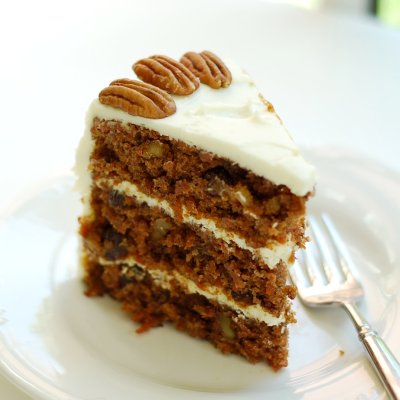
The Best Carrot Cake
5 ounces (1 cup) dark raisins
1 pound carrots to make 4 cups shredded, firmly packed
2 cups minus 2 tablespoons all-purpose flour
2 teaspoons double acting baking powder
1 teaspoon baking soda
1 teaspoon salt
2 teaspoons cinnamon
1 tablespoon unsweetened cocoa powder
4 large or extra-large eggs
2 teaspoons vanilla extract
1 cup granulated sugar
1 cup dark brown sugar, firmly packed
1 1/4 cups vegetable oil
5 1/2 ounces walnuts, cut into medium-small pieces
Cream Cheese Icing, recipe follows
a handful of pecan halves, for garnish
Preheat the oven to 350 degrees F. Spray three 9-inch cake pans with cooking spray, line the bottoms with parchment, and spray the parchment.
Place the raisins in a vegetable steamer over shallow water in a saucepan and steam for 10 minutes. Uncover and set aside.
Grate the carrots using a food processor (I used the disc with largest holes, but you can grate them more finely if desired) or a standing metal grater. Measure and set aside.
Sift together the flour, baking powder, baking soda, salt, cinnamon, and cocoa, and set aside.
In the bowl of an electric mixer, beat the eggs. Add the vanilla, both sugars, and oil, and mix until well combined. Add the dry ingredients and mix on low speed only until combined. Stir in the carrots, raisins, and nuts.
Divide the batter evenly among the three pans and use a spatula to even out the batter. Bake the pans for 35 to 40 minutes or until the tops just spring back when gently pressed with a fingertip and the cakes begin to pull away from the sides of the pan. Remove from the oven and let stand 2-3 minutes in the pans on a cooling rack. Run a small knife around the perimeter of the cake and invert the cakes onto a cooling rack and allow to cool completely. It is not necessary to remove the parchment from the bottoms of the cakes at this time.
Brush any stray crumbs from the sides of the cakes and transfer the cakes to the freezer, unwrapped, for at least an hour, or until cakes are firm enough to handle. If you wish to freeze the cakes longer, wrap the frozen layers in plastic wrap and return to the freezer until you are ready to frost the cake. Do not thaw the layers before icing.
When ready to ice the cake, prepare a large, flat cake plate by lining it with four strips of wax paper to make a square. This wax paper will catch any crumbs and icing while frosting the cake. Remove the parchment paper from the bottoms of the cakes. Place one cold and firm cake layer upside down on the plate. Spread a thin layer (2/3 cup) of the icing evenly over the cake. Cover with the second layer, also upside down. Spread another 2/3 cup icing over the second layer. Place the third layer on top, also upside down and spread the remaining icing over the top and sides of the cake. Remove the wax paper strips carefully. Garnish the cake with pecan halves. Refrigerate the cake for a few hours or for a day or two. Serve cold right from the refrigerator.
Cream Cheese Icing
from Maida Heatter's Great Book of American Desserts
16 ounces cream cheese, at room temperature
4 ounces unsalted butter, at room temperature
1 teaspoon vanilla extract
2 cups sifted confectioners' sugar
In the bowl of an electric mixer, beat the cheese and butter until soft and smooth. On low speed beat in the vanilla and sugar, and then on high speed beat for a few moments until smooth.
Labels:
tort
Wednesday, October 12, 2011
Chocolate Mousse Torte
Hands-On Time: 30 minutes
Ready In: 1 hour
Yield: 6-8 slices
IngredientsReady In: 1 hour
Yield: 6-8 slices
1lb semi sweet chocolate pieces or chocolate chips
1 stick butter
5 egg yolks
1T. flour
1T. sugar
1T. hot water
5 egg whites
powdered sugar for dusting
- Melt togethe the chocolate pieces and butter and allow mixture to cool for 15-20 minutes.
- Blend together the egg yolks, flour, sugar and water.
- Add the cooled chocolate to the egg mixture and blend until smooth.
- Beat the egg whites until stiff.
- Fold egg whites into chocolate/egg yolk mixture. Be careful not to over beat this -- it needs to stay light and fluffy.
- Pour mixture into a greased springform pan no larger than a 10" diameter-and bake at 425 degrees F for 15 minutes. Don't over bake this or it will dry out.
- Dust with powdered sugar or set a dry clean doily (or other open-work) on top of torte and sprinkle with powdered sugar. Remove by pulling straight up. The design left behind is a very pretty effect!
Note
Serve right side up. This will be soft in the center when it comes out of the oven, but will set up as it cools. When done correctly the center is nearly like fudge and the edges are slightly dry.
Labels:
tort
Subscribe to:
Posts (Atom)